Emergency Water Removal in Henderson, NV
What to do in the first minutes after discovering standing water, and how the extraction process generally works.
What counts as an emergency water situation
Active, ongoing water intrusion is the clearest case — a burst supply line, a water heater that's failed and is actively leaking, an overflowing toilet or washing machine, or a roof leak during a storm. In these situations, stopping the water source and removing standing water quickly are the priorities, ahead of cleanup and repairs. A slow, contained drip that's been dealt with (source stopped, small area) is a different kind of situation than an actively spreading leak, even though both are technically "water damage" — the first can often wait for a scheduled assessment, the second generally can't.
A useful way to think about it: if water is currently moving — spreading across a floor, dripping steadily, or still coming from a fixture — treat it as an emergency and act on the safety steps below while you call. If water already stopped and you're looking at damage from something that happened earlier (yesterday, last week), you're likely better served starting with our restoration overview to understand the fuller process, since the immediate urgency is lower even though the situation still needs attention.
Immediate safety steps
If you can safely reach it, shutting off water at the fixture or at the home's main shutoff valve stops the situation from getting worse. In most Henderson homes, the main shutoff is near the water meter at the street, at a hose bib on an exterior wall, or in the garage. If you can't locate the main shutoff quickly, individual fixture shutoffs — the small valves behind a toilet or under a sink — are usually faster to find and just as effective for a fixture-specific leak.
If water is near outlets, switches, or any electrical fixtures, shutting off power to that area or circuit is worth doing before anyone walks through standing water. Standing water and live electrical circuits are a genuine safety hazard, not just a property-damage concern, and this step should come before worrying about the water itself. If a ceiling is sagging or bulging, stay out of that room — it can indicate the structure above is holding a significant amount of water and is at risk of collapse. This is one of the few situations on this page where "wait for help before entering" is the right call rather than trying to address it yourself.
What to gather while you wait
If it's safe to do so, a few minutes spent before extraction starts can help later: note the approximate time you discovered the water, take photos or a short video of the affected area, and if you know or suspect the source (a specific appliance, a specific pipe), make a note of that too. None of this should delay shutting off the water or addressing an electrical hazard — it's simply useful context to have ready when help arrives or when you're filing an insurance claim later. See our insurance documentation page for more on what's generally useful to keep.
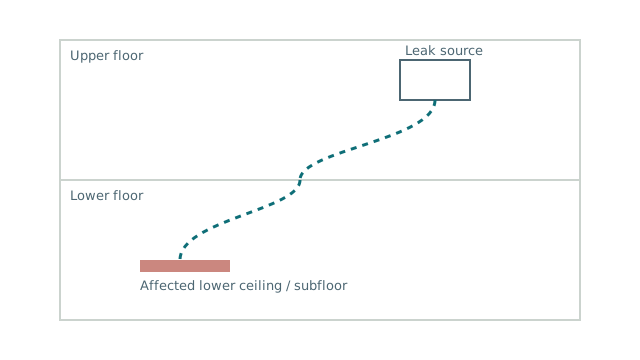
Illustration: a simplified example of how water from an upper-floor leak can travel down through framing before it becomes visible on a lower ceiling.
How extraction generally works
Once the source is stopped, standing water is removed with pumps and wet-vacuum extraction equipment rather than mops or household vacuums, which aren't built for volume and can create electrical hazards. For larger areas, truck-mounted or portable extraction units are used to pull water out of carpet, padding, and hard flooring efficiently; for smaller, contained spills, handheld extraction tools may be enough. Extraction typically continues until water is out of carpet, padding, and hard flooring, at which point the drying phase begins — see our structural drying page for what comes next.
Extraction alone doesn't mean a space is dry — it means the standing, pooled water is gone. Materials can still hold significant moisture after extraction, which is why the process moves directly into monitored drying rather than stopping once the floor looks clear.
Why speed matters
Porous materials absorb water quickly, and the longer water sits, the more it tends to spread and wick into materials that weren't part of the original spill area — water can travel sideways under baseboards and flooring well beyond the visible wet area. If the water source involved anything other than a clean supply line, there's also a contamination consideration — see sewage cleanup for more on that distinction. And the conditions that allow mold to begin developing can start within one to two days in a warm, enclosed space, which is part of why extraction and drying are treated as time-sensitive rather than something to schedule for convenience.
Emergencies outside normal business hours
Water doesn't wait for business hours, and neither does the damage it causes. If you're dealing with an after-hours emergency, call and describe the situation — we'll talk through it and let you know what's realistic in terms of timing for your specific situation.
First steps
Do this first
- Shut off the water source if it's safe to reach
- Shut off electricity to the affected area if water is near outlets or fixtures
- Move valuables and electronics away from the water if it's safe to do so
- Photograph the damage before extraction begins
- Note the approximate time the water was first noticed
Avoid this
- Don't use a household vacuum on standing water
- Don't walk into a room with a sagging ceiling
- Don't use extension cords or outlets in or near wet areas
- Don't assume a small puddle means a small problem — check nearby walls and flooring too
- Don't delay calling because you think the amount of water is "too small to matter"
Frequently asked questions
Where's my main water shutoff valve?
In most Henderson homes it's near the front hose bib, in a garage, or at the water meter near the street. If you can't find it quickly, shutting off water at the specific fixture (behind a toilet or under a sink, for example) is often faster.
Is it safe to use a shop vac on the water myself?
A wet/dry shop vac rated for liquids can be reasonable for small amounts of clean water, away from any electrical hazards. Larger volumes, contaminated water, or water near electrical systems are a different situation.
How do I know if water reached inside the walls?
Surface-dry drywall can still be wet underneath. Moisture meters are the standard way to check this, since visual inspection alone can miss trapped moisture.
What if I can't find the water shutoff at all?
Call for guidance — in some cases, the fixture itself (a supply line, a toilet valve) can be shut off even if the home's main valve is hard to locate, which is often enough to stop the immediate problem.
Does extraction damage flooring that could otherwise be saved?
No — extraction equipment is designed to remove water without additional damage to carpet, padding, or hard flooring. The goal is specifically to remove water while preserving as much of the material as possible.
Talk through what's happening
Call and describe the situation — we'll help you figure out the right next step.