Structural Drying & Moisture Detection in Henderson, NV
Drying a structure properly means drying what's inside the walls and floor, not just what's visible on the surface.
Why surface-dry isn't the same as dry
Drywall, framing, and subfloor can look and feel dry on the surface while still holding moisture underneath. That trapped moisture is exactly what allows mold to develop and materials to warp or deteriorate over time, which is why structural drying is treated as a monitored process rather than a single pass with a fan. A room can look completely normal within a day of a leak while the wall cavity behind it is still significantly wet — which is part of why professional drying relies on measurement rather than visual inspection alone.
How moisture is measured
Moisture meters — both pin-type meters that measure moisture at a specific depth and non-invasive scanning meters that read through a surface — are the standard way to check materials that look dry but aren't. Readings are typically taken in multiple spots and compared against an unaffected area of the same material to establish what "normal" looks like for that specific building, since materials vary in their baseline moisture content depending on climate, age, and composition. Henderson's dry desert climate generally means baseline moisture readings in unaffected materials are on the lower end, which can actually make it easier to identify materials that are still holding excess moisture from a water event.
Equipment used
Air movers are positioned to move air across wet surfaces and speed up evaporation, while dehumidifiers remove the resulting moisture from the air so it doesn't just resettle on nearby surfaces. The number and placement of each depends on the size of the affected area and how much moisture is involved — a single small bathroom leak might need one or two air movers and a small dehumidifier, while a larger loss spanning multiple rooms needs a more substantial equipment setup and, often, containment barriers to keep the drying environment controlled.
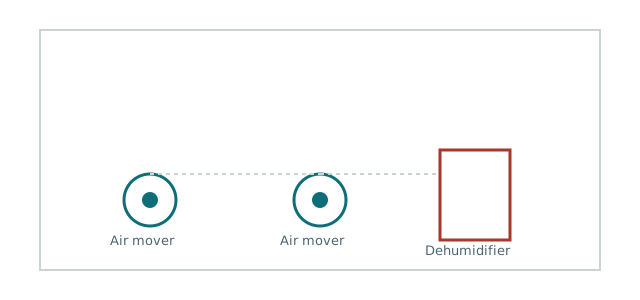
Illustration: a simplified example of air mover and dehumidifier placement in a room being dried.
How the drying process is generally monitored
Inspect & measure
Moisture readings are taken across affected materials to map how far the water traveled, not just where it's visibly wet. This step often reveals that a leak reached further than the visible damage suggested.
Position equipment
Air movers and dehumidifiers are set up based on the size and shape of the affected area, and any containment needed to keep the drying environment separate from the rest of the property.
Monitor daily
Moisture readings are checked at intervals, and equipment placement is adjusted as materials dry unevenly — some materials and some spots within the same wall dry faster than others.
Confirm a dry standard
Drying continues until materials reach a moisture level comparable to unaffected areas, not just until things feel dry to the touch. This is the point at which equipment is typically removed.
What affects how long drying takes
The amount of water involved, the types of materials affected, the ambient temperature and humidity, and how much airflow can reach the wet areas all influence drying time. A contained bathroom leak in an otherwise open, well-ventilated space generally dries faster than a similar amount of water trapped in an enclosed closet or a wall cavity with limited airflow. Henderson's low ambient humidity for most of the year is generally favorable for drying, since dehumidifiers and air movers have an easier job when the surrounding air isn't already saturated — the main exception being during the monsoon season, when outdoor humidity briefly rises.
When demolition becomes necessary
Some materials don't respond well to drying — wet insulation loses its effectiveness once saturated, particleboard cabinetry swells and doesn't return to its original shape, and drywall that's been wet long enough can delaminate. When materials fall into this category, removing and replacing them is usually a better outcome than trying to fully dry and save them. A general guideline used across the industry is that drywall wet for more than about 24 to 48 hours, or insulation that's been saturated at all, is more often replaced than dried, though the specifics depend on the material and the water category involved.
Air quality during drying
Running air movers and dehumidifiers for several days does change the air in a space — it's typically drier and there's more air movement than usual. For most situations this isn't a concern, but if you have respiratory sensitivities or specific concerns, it's worth mentioning them so ventilation and equipment placement can account for that.
Drying in different areas of a home
A kitchen or bathroom leak often involves cabinetry, which complicates drying because cabinet interiors and toe-kicks have limited airflow compared to an open room — sometimes cabinet doors need to stay open, or a kick-plate needs to be removed temporarily, to let air movers reach the space underneath. A leak affecting carpet and padding requires a different approach again, since padding holds significantly more water than carpet fiber itself and often needs to be removed even when the carpet on top can be saved. A leak that reached a closet with stored items adds another layer, since those items typically need to be moved out before the space can dry properly.
Structural drying for commercial spaces
Larger commercial spaces, described in more detail on our commercial water damage page, generally require a proportionally larger drying setup and a more involved monitoring schedule, particularly where suspended ceilings, raised flooring, or built-in millwork are involved.
Frequently asked questions
How long do air movers and dehumidifiers need to run?
It varies with the amount of water involved and the materials affected, and is usually guided by moisture readings rather than a fixed number of days.
Will structural drying equipment raise my electricity bill?
Air movers and dehumidifiers do draw power, and running several of them for multiple days will use more electricity than normal — this is worth factoring into your expectations.
Can drywall be saved if it got wet?
Sometimes, if it's caught early and dried before it delaminates or the paper backing shows mold growth. Drywall that's been wet for an extended period, or that was exposed to contaminated water, is more often removed and replaced.
Is it normal for drying to take longer than I expected?
Yes, especially for materials with limited airflow around them, like inside a closet or behind cabinetry. Moisture readings, not the calendar, determine when drying is actually complete.
Do I need to keep the equipment area closed off?
Sometimes containment barriers are used to keep the drying environment controlled, particularly for larger losses or when contamination is a factor. For smaller, contained leaks this is less often necessary.
Can pets or children be around drying equipment?
Air movers and dehumidifiers themselves are generally safe to be around, but it's worth keeping curious pets and small children from tipping over or interfering with equipment, and away from any area still being actively worked on.
Talk through what's happening
Call and describe the situation — we'll help you figure out the right next step.